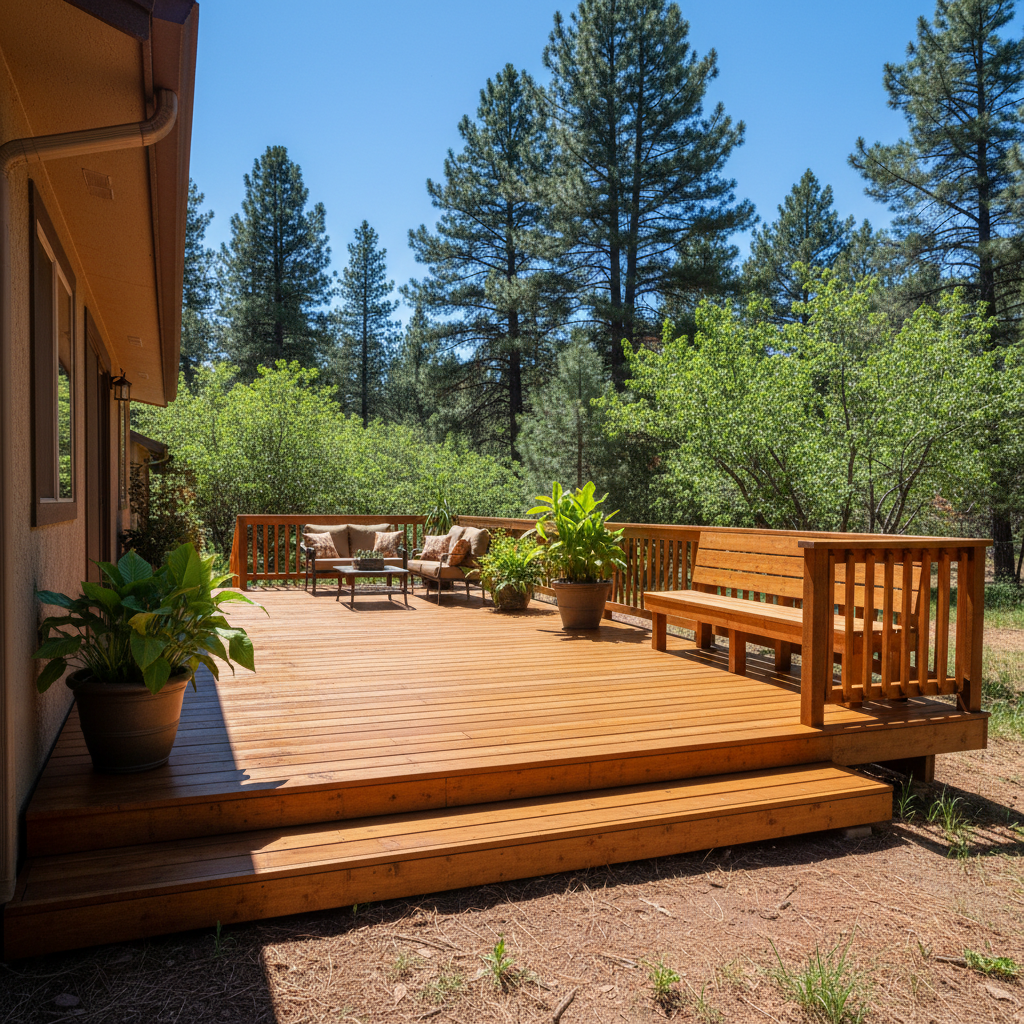
So, you've got this great wood deck – maybe classic cedar, or sturdy pressure-treated pine – and you know it needs some love to handle our Flagstaff weather. Painting or staining isn't just about making it look nice; it's really about protecting that wood from our harsh sun, the snow, and everything else Mother Nature throws at it. But here's the thing: up here on the mountain, timing is absolutely crucial.
When to Get Your Deck Looking Fresh Again
Forget what those national DIY magazines tell you about staining in spring. For us in Flagstaff, spring often brings unpredictable snow, cold nights, and plenty of moisture. What you're really looking for is that sweet spot: when the wood is dry, the air isn't too cold, and you're not fighting daily thunderstorms. That usually puts us right in late spring, early summer, or sometimes even early fall.
- Late Spring (May-June): This can be a good window. The snow's usually gone, and the ground has had a chance to dry out. But watch out for those late-season cold snaps. If the overnight temperatures dip below 40-45°F, most stains and paints just won't cure right.
- Early Summer (July-early August): Often, this is the best time. We get consistent warm days, and the humidity usually stays low. The wood will be nice and dry. The only snag? Our monsoon season typically starts mid-July. You absolutely cannot stain or paint if rain is in the forecast within 24-48 hours of application, and you need to make sure the deck has been dry for a few days before you even start.
- Early Fall (September-early October): Another excellent window. The summer monsoons are usually winding down, and we still have plenty of warm, dry days. Again, keep an eye on those overnight lows. Once we start getting consistent freezes, you've pretty much missed your chance until next year.
The biggest mistake I see homeowners make is trying to rush things. They'll see a couple of nice days in April and think, 'Now's my chance!' Then we get a freak snowstorm or a week of cloudy, damp weather, and their fresh stain job is ruined because it couldn't dry or cure properly. You've just got to be patient and wait for Mother Nature to give you the green light.
Weather Conditions: The Make-or-Break Factor
It's not just about the month; it's about the daily conditions. You need a Goldilocks day: not too hot, not too cold, not too humid, and definitely not windy.
- Temperature: Most products suggest you apply them between 50°F and 85°F. If it's too cold, the product won't dry or cure right, leaving you with a sticky mess or poor adhesion. Too hot, and it can dry too fast, causing lap marks, uneven coverage, and cracking. Our high-altitude sun can really bake a deck, even if the air temperature feels moderate.
- Humidity: Low humidity is your best friend. High humidity really slows down drying times. Flagstaff generally has dry air, which is a plus, but after a rainstorm or during the monsoons, the humidity can definitely spike.
- Moisture: This is non-negotiable. Your deck needs to be bone dry. I mean, absolutely no moisture. If you've cleaned your deck, you need to give it at least 48-72 hours, sometimes even longer, to completely dry out. Here's a simple test: tape a small piece of plastic sheeting to the deck surface in the morning. If you see condensation under it a few hours later, the wood's still too wet.
- Wind: A breezy day might feel nice when you're working, but it's terrible for staining or painting. Wind can make the product dry too quickly, leading to streaks. It also blows dust, pollen, and pine needles onto your wet surface, which, let's be honest, is not what anyone wants.
I've seen folks try to push through a windy day, only to have their freshly stained deck look like it's got a permanent layer of forest debris stuck to it. Fixing that is a real headache.
Protecting Your Deck Investment All Year Long
Once you've got that fresh coat of stain or paint on, you're not finished. Protecting your deck is an ongoing job, especially with our extreme seasons.
- Snow Removal: When winter hits and we get those heavy dumps, try to clear the snow off your deck. Don't use a metal shovel that can scratch the surface; a plastic shovel or a broom is much better. Letting snow sit and melt repeatedly can introduce a lot of moisture into the wood, particularly if there are any tiny cracks in your finish.
- Keep it Clean: Regular cleaning, even just sweeping off leaves and pine needles, stops organic matter from breaking down on your deck surface. That stuff holds moisture and can lead to mildew or even rot over time.
- Check for Damage: Do a quick inspection a couple of times a year. Look for any peeling, cracking, or spots where the finish is wearing thin. Catching these small issues early means you can do a touch-up instead of a full re-stain.
- Consider a Cover: For some decks, especially those that get direct, all-day sun or are under heavy tree cover, a pergola or even a temporary shade sail can really extend the life of your deck's finish by cutting down on UV exposure and keeping debris off.
Look, your deck is an extension of your home, and it's a big investment. Taking the time to understand our local climate and applying your stain or paint at the right moment, then maintaining it throughout the year, will save you a ton of money and headaches down the road. If you're ever unsure, or if your deck needs more than just a fresh coat, give us a call at Flagstaff Deck Creations. We're always happy to lend an expert eye.