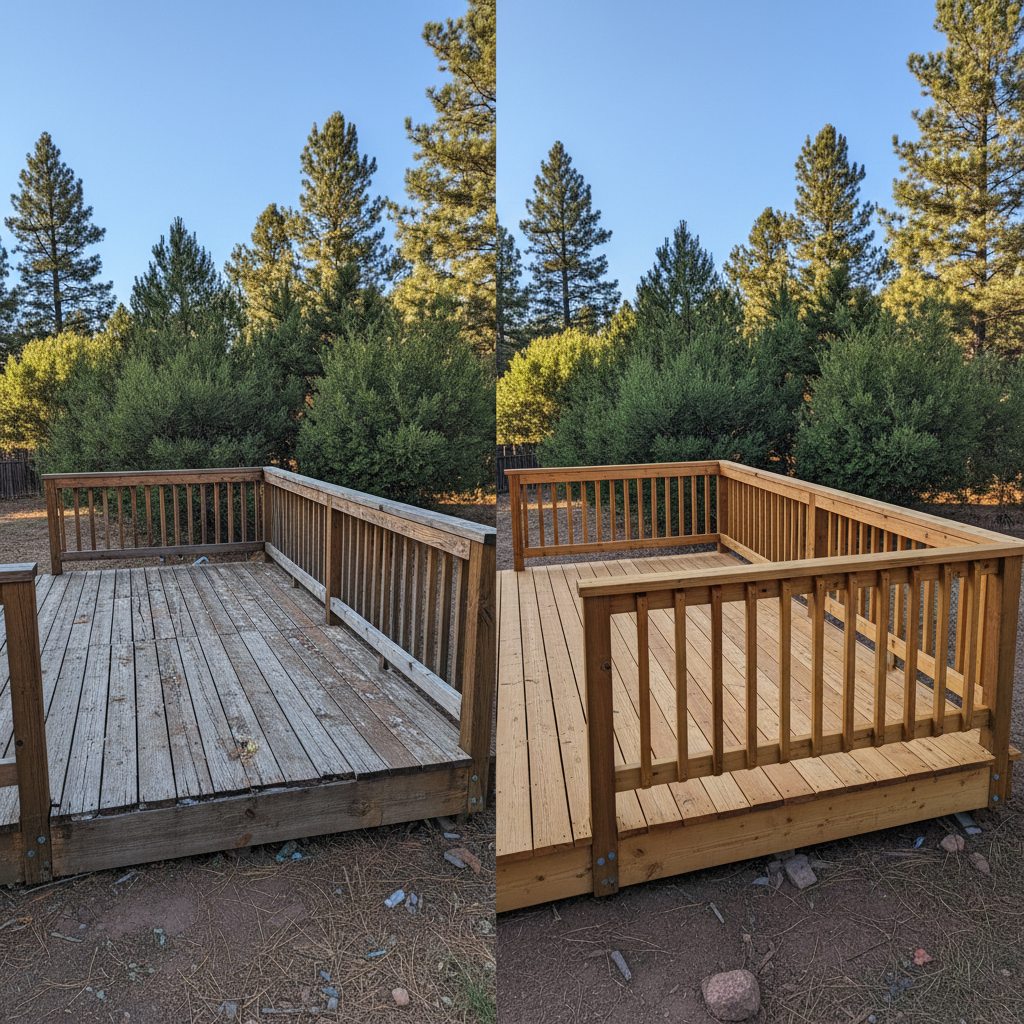
Thinking about a new wooden deck for your Flagstaff home? You've got options, and honestly, the choice between different types of wood can feel a little overwhelming. Two of the most common materials I see folks considering are pressure-treated lumber and natural cedar. Both have their place, but they're definitely not the same, especially when you're dealing with our unique Flagstaff climate.
I've built a lot of decks around here, from the dense Ponderosa Trails neighborhoods to the more open lots out in Kachina Village, and I've seen firsthand how different materials perform. So, let's cut through the noise and talk about what you really need to know when you're deciding between pressure-treated and cedar for your deck.
The Lowdown on Pressure-Treated Lumber
Pressure-treated wood, usually pine or fir, has chemicals forced into it under high pressure. This process makes it resistant to rot, fungus, and insects. That's a big deal, especially here where we get plenty of moisture and freeze-thaw cycles that can really beat up untreated wood.
Cost
This is where pressure-treated really shines for a lot of homeowners. It's almost always the most budget-friendly option upfront. You're going to pay significantly less for the material itself compared to cedar. If you're trying to stretch your dollar without sacrificing too much on durability, pressure-treated is a strong contender.
Durability & Longevity
Because of those chemicals, pressure-treated lumber is built to last. It resists decay and pests really well. You can expect a well-maintained pressure-treated deck to last 20-30 years, sometimes even longer. However, it can be prone to warping, cracking, and splitting if it's not properly sealed and maintained. Our dry, sunny summers followed by snowy winters can be tough on it, causing it to expand and contract a lot.
Maintenance
You can't just build it and forget it. Pressure-treated wood needs regular cleaning and sealing or staining, usually every 1-3 years depending on the product you use and how much sun exposure your deck gets. This helps protect it from UV rays and moisture, keeping it looking good and preventing those common issues like splintering and checking.
Appearance
Fresh pressure-treated wood often has a greenish tint from the chemicals, which fades over time to a grayish-brown. It's not naturally as beautiful as cedar, but it takes stain well, so you can achieve a wide range of colors to match your home. The grain isn't as pronounced or attractive as cedar, but once stained, it looks perfectly fine for most applications.
Exploring Natural Cedar Decks
Cedar, particularly Western Red Cedar, is a premium choice. It's naturally beautiful, aromatic, and has inherent qualities that make it a great decking material.
Cost
Here's the flip side: cedar is more expensive than pressure-treated lumber, often 1.5 to 2 times more for the material. This higher upfront cost is usually the biggest hurdle for folks considering it. But remember, you're paying for natural beauty and some built-in advantages.
Durability & Longevity
Cedar contains natural oils and tannins that make it inherently resistant to rot, decay, and insects. It's also more stable than many other woods, meaning it's less prone to warping and twisting. A well-built and maintained cedar deck can easily last 20-25 years, sometimes more. It handles our high-altitude sun and snow pretty gracefully without as much tendency to split as pressure-treated wood.
Maintenance
Like any wood deck, cedar needs maintenance. It's a bit less demanding than pressure-treated when it comes to resisting rot, but it still needs to be cleaned and protected from UV rays and moisture. If you want to keep that rich, reddish-brown color, you'll need to stain or seal it every 2-4 years. If you let it go, it'll weather to a beautiful silvery-gray patina, which some people actually prefer.
Appearance
This is where cedar truly shines. It has a gorgeous, rich color and a distinctive grain pattern that many find incredibly attractive. It adds a natural, high-end look to any home. If aesthetics are a top priority for your outdoor living space, cedar is tough to beat.
My Recommendation for Flagstaff Homeowners
So, which one should you choose for your Flagstaff home? It really boils down to your budget and what you prioritize.
If cost is your primary concern, and you're diligent about maintenance, pressure-treated lumber is a solid, economical choice. It'll give you a durable deck that stands up to our weather, as long as you commit to keeping it sealed. It's a great workhorse material.
However, if your budget allows, and you're looking for superior natural beauty, stability, and a bit less worry about warping and splitting over the years, I'd lean towards cedar. Its natural resistance to decay and insects, combined with its stunning appearance, makes it a fantastic long-term investment, especially with our specific climate challenges. The way it holds up to the dry air and intense sun we get here, without as much tendency to check and crack like some other woods, makes it a real winner in my book.
Ultimately, both can make for a great deck. Just make sure you're aware of the pros and cons of each before you make your final decision. And no matter what you choose, proper installation and regular maintenance are key to getting the most out of your investment. If you're still weighing your options or ready to get started, give Flagstaff Deck Creations a call. We're happy to talk through what makes the most sense for your specific project and budget.