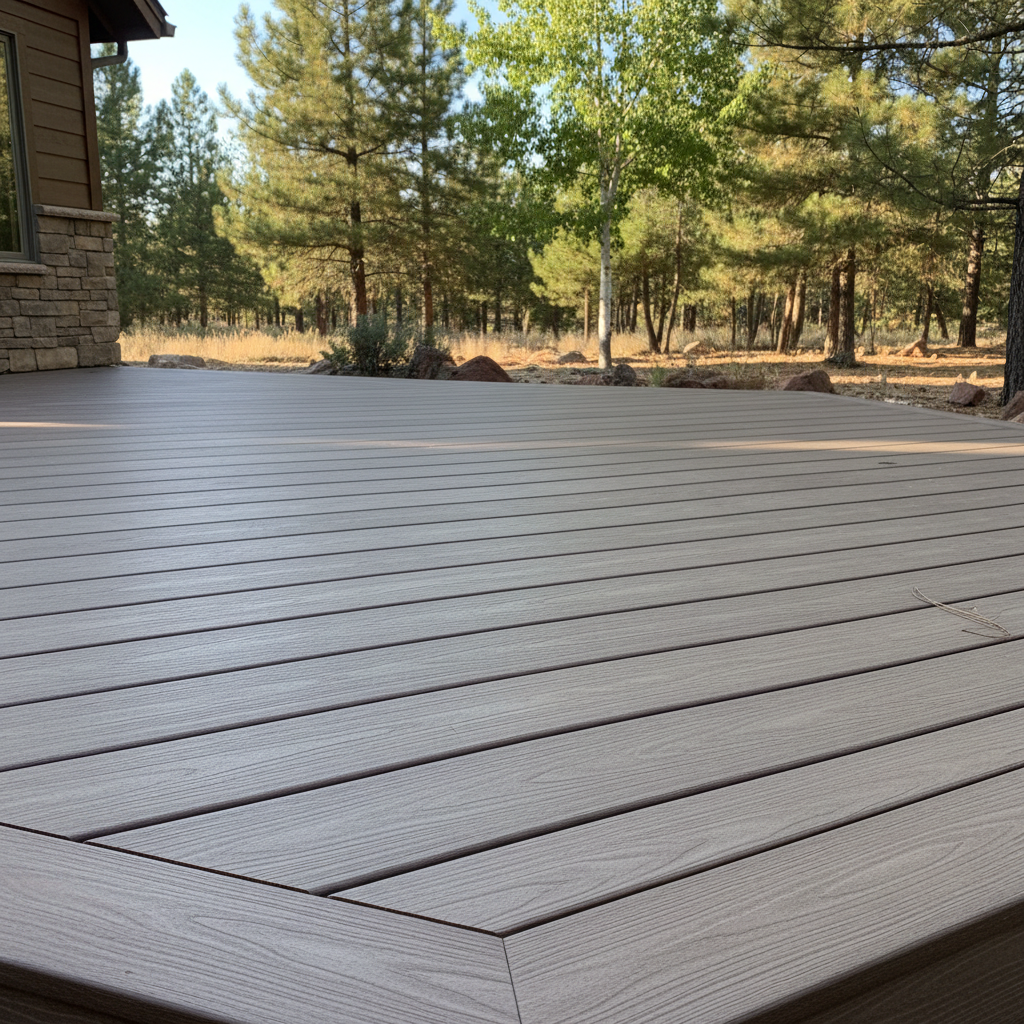
So, you're thinking about a Trex deck. Honestly, that's a smart move for Flagstaff. Our weather up here — those brutal winters, the intense summer sun, even the monsoon rains — really takes a toll on wood. Trex, or other composite decking, just holds up better. But before you jump in, there’s a lot to think about. I'm going to share what I tell my own customers, from the very first idea all the way to years down the road.
Before You Build: Planning Your Trex Deck
This is where most of the big decisions happen, so don't rush it. First, what do you actually want to use the deck for? Is it just a small landing off the back door, or are you hoping for a big outdoor living space for entertaining? That's going to decide the size, shape, and even which Trex product you pick. They've got different lines, some with deeper wood grain patterns, some with multi-tonal streaking, and, of course, varying price points. It's really worth getting some samples and seeing them in your actual yard, at different times of day. The color can look totally different in full sun versus shade, you know?
Next, think about your existing house and yard. Where will the deck connect? How will it flow with your landscaping? Will it block light into any windows? And this is a huge one for Flagstaff: what's the ground like? We've got everything from solid rock to that weird, silty volcanic soil. That's going to affect your foundation. If you're planning on doing the framing yourself, you'll need to dig footers below the frost line — which is usually 30-36 inches deep here. That's a lot of digging, especially if you hit rock. You'll also need to check with the City of Flagstaff or Coconino County for permits. Don't skip this step; it'll save you headaches later.
Your budget is another huge factor. Trex costs more upfront than pressure-treated lumber, no two ways about it. But you're buying durability and low maintenance. Factor in not just the decking boards, but also the framing lumber (usually pressure-treated), fasteners, the railing system, and any extras like lighting or stairs. Railings can actually add a surprising amount to the cost, especially if you choose composite or aluminum options instead of basic wood pickets.
During the Project: DIY vs. Calling a Pro
Okay, so you've got your plan and your materials. Now for the actual build. This is where you really need to be honest with yourself about your skills and time. The framing — building the substructure that supports the deck boards — is absolutely critical. It has to be strong, level, and built to code. If the frame isn't right, the deck won't be right, no matter how perfectly you lay the Trex. This is often where homeowners get into trouble. If you're not comfortable with carpentry, understanding load-bearing, proper joist spacing, and flashing details, this is definitely a job for a professional. A wobbly deck or one that's not properly attached to your house isn't just an eyesore; it's a safety hazard, plain and simple.
Laying the Trex boards themselves? That's more manageable for a skilled DIYer. Trex cuts like wood, but you do need good blades. You'll use hidden fasteners for a clean look, or color-matched screws. The biggest thing here is making sure your spacing is consistent and your lines are straight. Don't forget about expansion and contraction — composites move a bit with temperature changes, so you can't butt them up tight against each other or the house. The instructions will tell you the right gap. For stairs, especially complex ones, I'd lean towards hiring a pro. Getting stair stringers cut right and making sure all the steps are uniform and safe is harder than it looks, trust me.
If you decide to tackle the whole thing yourself, make sure you've got the right tools: a good miter saw, a drill, a level (a long one!), and all the safety gear. It's a big project, and it can take weeks of weekend work, especially if you're doing it alone.
After the Build: Keeping Your Trex Deck Looking Great
One of the main reasons people go with Trex is low maintenance, and it's true. You won't be staining or sealing it every couple of years like a wood deck. But